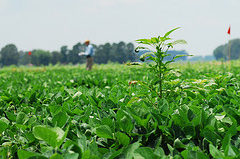
Tips for Weed Management
Check out THIS ARTICLE from USB for thoughts on how to manage weeds this season. Be vigilant and take action!
Everyone knows scouting for insects is an important part of best farm management practices and helps to minimize yield losses, but what do experts recommend in terms of scouting? Read this article from the United Soybean Board to find out: http://unitedsoybean.org/article/researchers-weigh-in-on-top-three-insect-scouting-tips-to-minimize-yield-loss/.
We will post information on USDA Farm Service Agency, USDA Risk Management Agency, USDA Rural Development, USDA NRCS and other agencies and programs offering disaster assistance to farmers. Hurricane Matthew made a greater than anticipated impact on central and coastal North Carolina and with rivers and streams continuing to rise as floodwaters drain to the…
DetailsWith planting season on the horizon and weeds not too far behind, check out this advice from Purdue University Associate Professor, Bryan Young, PhD., about managing weed emergence in deep-till and no-till environments: http://unitedsoybean.org/article/tillage-plays-a-big-role-in-managing-herbicide-resistant-weeds-says-researcher/
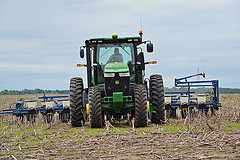
Sprayer technology is becoming more advanced all the time, allowing farmers to be more sustainable. New technology is on the horizon that will continue to ensure crops are protected from pests in the most efficient, effective and environmentally manner possible. Learn more about variable-rate-technology (VRT), on-the-go nozzle control and electrostatic sprayers in THIS ARTICLE from…
DetailsWhen the time is right to make a move to add data into a farm operation, setting up precision agriculture systems, software and sensors the right way is critical. It is helpful to consult an expert to ensure the data is useful. Scott Shearer, Ph.D., a professor and chair of the department of food, agriculture…
DetailsSoybean cyst nematode is prevalent in North Carolina and is the number one soybean disease in the U.S., resulting in yield losses of more than 100 million bushels per year across the country. Read this article for the signs and symptoms of SCN, as well as to get tips on how to manage it: http://unitedsoybean.org/article/what-lies-beneath/.
In a recent study conducted by the Iowa Soybean Association, on-farm trial research proved narrow row soybean planting can make a huge difference in yield. The row-width study averaged a 2.5-bushel yield boost from 30 to 15-inch soybean rows on 7 Iowa farms.* Similar results were shown in replicated trials in N.C. conducted by Dr.…
DetailsChina has not purchased any U.S. soybeans in the new marketing year that started September 1, and that is a huge problem for U.S. farmers. When the customer that historically buys 25% of U.S. production in just a few months’ time fails to materialize, farmers feel immediate pain. U.S. and North Carolina row crop farmers…
DetailsUsing pre-emergence herbicides is one of the most important things farmers can do to prevent weeds later, and is especially helpful given the problem with resistant weeds. READ THIS ARTICLE brought to you from USB and the soy checkoff to learn more about why to use them, when to apply them and how they help…
DetailsDrones are very useful, especially for data gathering. They can capture real-time data, can cover areas not feasible with ground methods and capture data not available through remote-sensing methods. It is possible to fly a drone in the morning and get data to evaluate issues to be addressed in the afternoon, limiting down time for…
DetailsIt’s more important than ever to make sure that any pesticides or herbicides a farmer sprays are accurate and as sustainable as possible, not to mention that their application is one that makes sense financially. Innovations in spray technology can help with this by allowing farmers to apply the resources more precisely, and as a…
Details